
Learning platform for companies: providers and LMS compared
Digital continuing education for your team
You are looking for a learning platform for your company? The crucial factor is whether you want to buy ready-made online courses, organize your own training, or combine both. Here you can compare content providers and learning management systems (LMS), their pricing models, and the criteria for your selection.
Which learning platform fits your company?
Start with a specific learning goal. For onboarding you need your own content, clear learning paths, and assignment by role. For professional development, the right courses and their practical relevance matter. For recurring training, check deadlines, reminders, and exportable participation reports in a demo.
- Small companies: Look for easy setup, low minimum order quantities, and minimal administrative overhead. Check who will manage content and user accounts internally.
- Midsize companies: Compare roles and permissions, custom content options, HR system interfaces, and ongoing operational effort.
- Internationally distributed teams: Check the actual available course languages, single sign-on, regional support, and reporting across multiple locations.
For your shortlist: Test a typical training from first login to completion with a small group. Then request a quote with the same number of users, contract term, and scope of services. This way you compare total costs rather than individual entry-level prices.
Content provider or learning platform? The two types of providers
In corporate e-learning, there are two types of providers that marketing often mixes up. One delivers content – ready-made courses, videos, microlearnings. The other delivers software to distribute content, document mandatory training, and evaluate learning progress. If you need both, you either buy from a provider that offers both or connect the courses to your own system via SCORM, xAPI, or LTI.
- Content provider – produces and licenses courses (Masterplan, PINKTUM, GoodHabitz, ZEIT Akademie). Usually billed per person per year, often with a minimum order quantity.
- LMS (Learning Management System) – the administration software: assign courses, monitor deadlines, document participation in an audit-proof manner. Essential as soon as training needs to be verified.
- LXP (Learning Experience Platform) – builds on an LMS and prioritizes recommendations, search, and learning paths. Useful once your library becomes too large for anyone to keep an overview.
They are connected via standards: SCORM is the classic for course import, xAPI also records learning activities outside the LMS, LTI integrates external platforms. Learn more in the E-Learning Glossary.
The best e-learning providers for companies at a glance
Ten providers that regularly appear on shortlists in German-speaking countries – sorted by the breadth of their offering for companies, not by rating. The order is not a ranking: a provider specializing in data skills cannot be meaningfully compared with a soft skills library.
| Provider | Short profile | Price | More info |
|---|---|---|---|
 MasterplanGerman market leader |
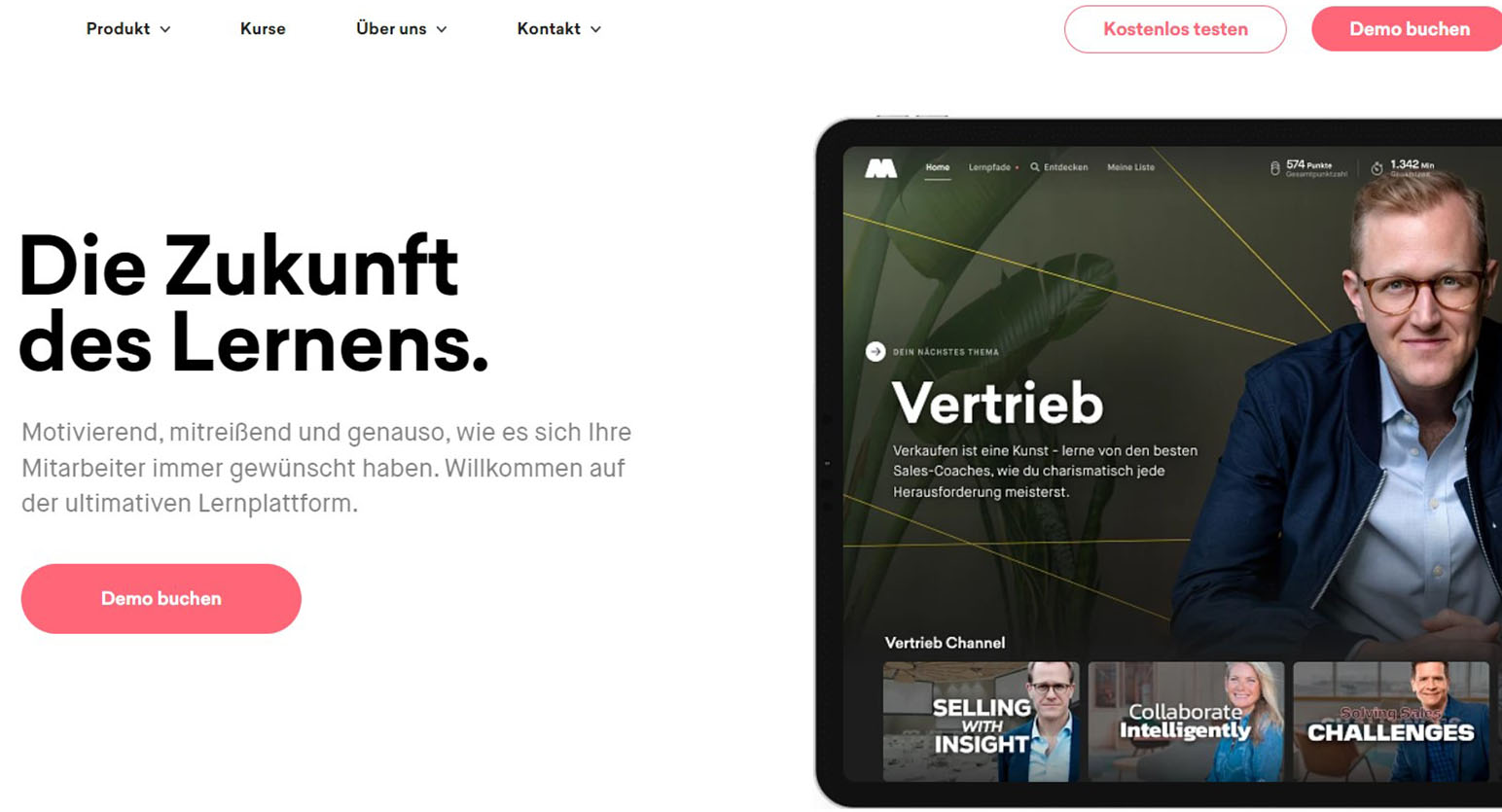
Learning engagement platform from Bochum with over 3,500 video courses in 26 languages and more than 300 corporate clients, including VW, Otto Group, and DZ Bank. Since September 24, 2025, Masterplan has been part of the Amadeus Fire Group.
|
on requestLicense per employee per year, tiered by company size | View profileView provider |
 Haufe AkademieContent and platform from a single source |
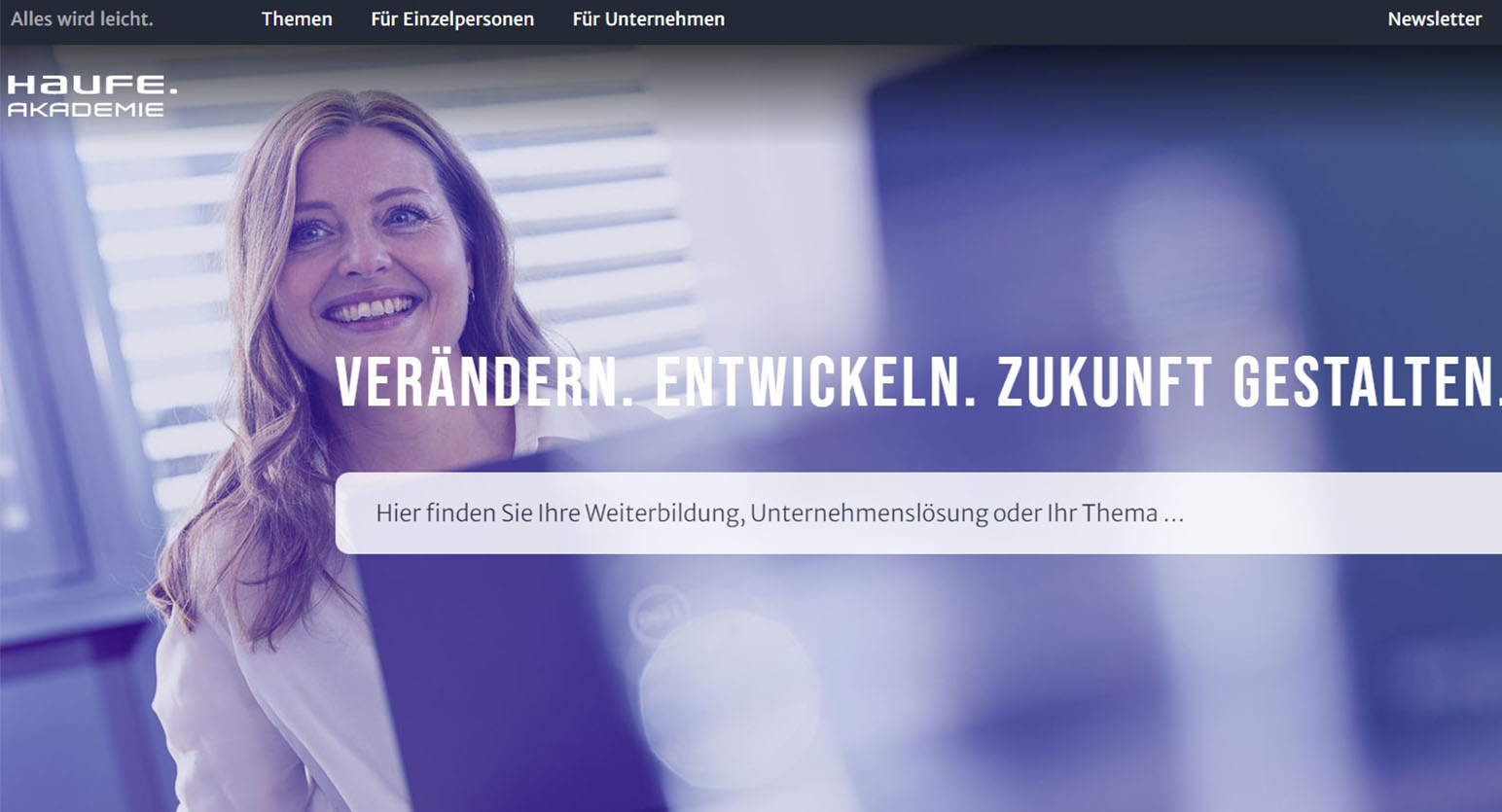
The largest continuing education provider in Germany: over 3,600 courses in 26 subject areas, approx. 690,000 learners per year, and more than 6,300 in-house training sessions in 2026 alone. The Digital Suite includes an LMS, an LXP, and a Content Kit with microlearnings.
|
on requestOpen seminars also bookable individually; Digital Suite as annual license | View profileView provider |
 LinkedIn LearningBroadest business library |
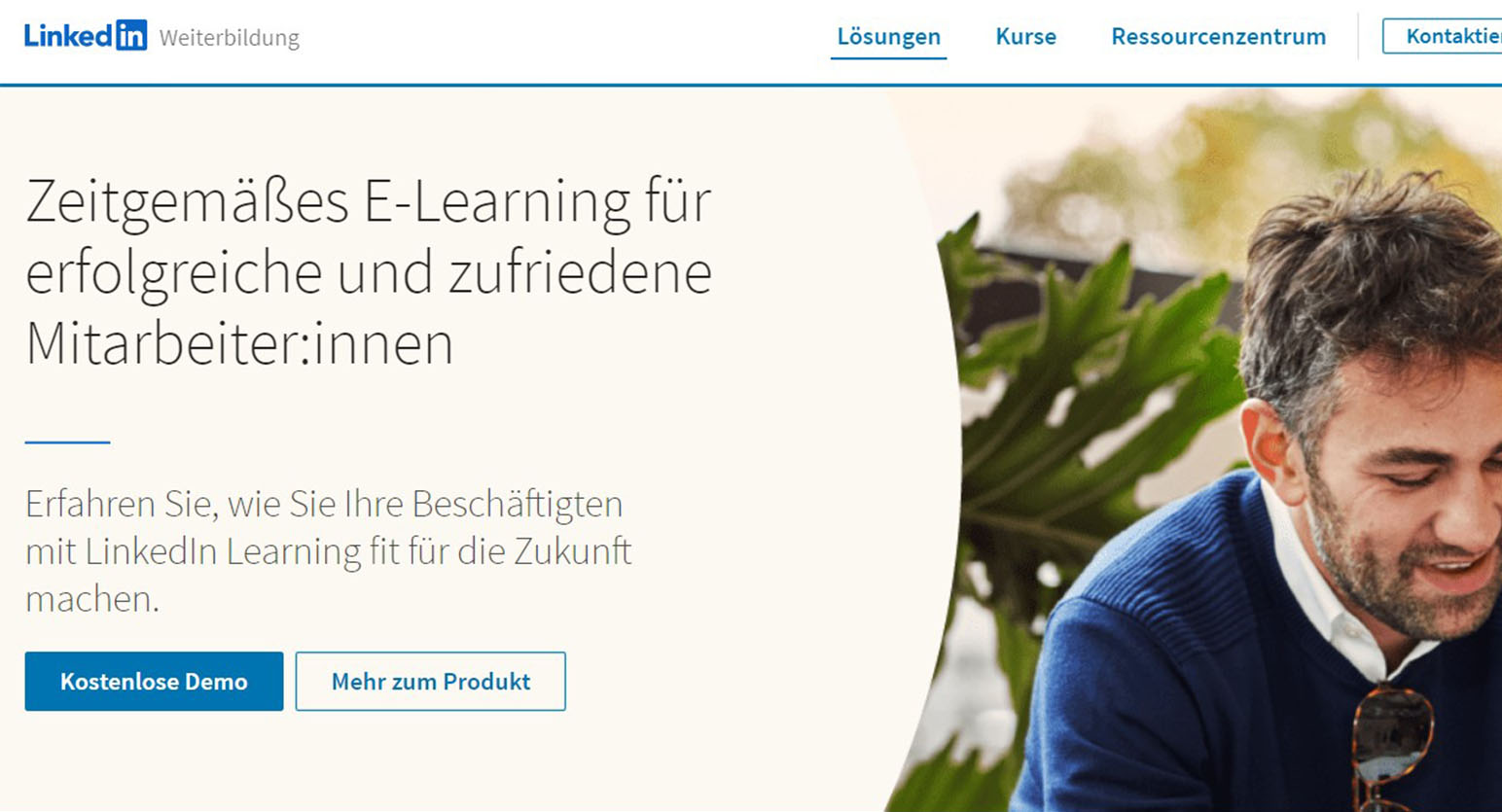
Over 21,000 courses in 25 languages, more than 2,500 of which in German – from Excel and SAP to project management and leadership. The Learning Hub supplements the library with an LXP that can incorporate third-party content and content from your own LMS.
|
on requestTeam and enterprise licenses through sales; individual subscription for comparison approx. 20 €/month on annual plan | Experience reportView provider |
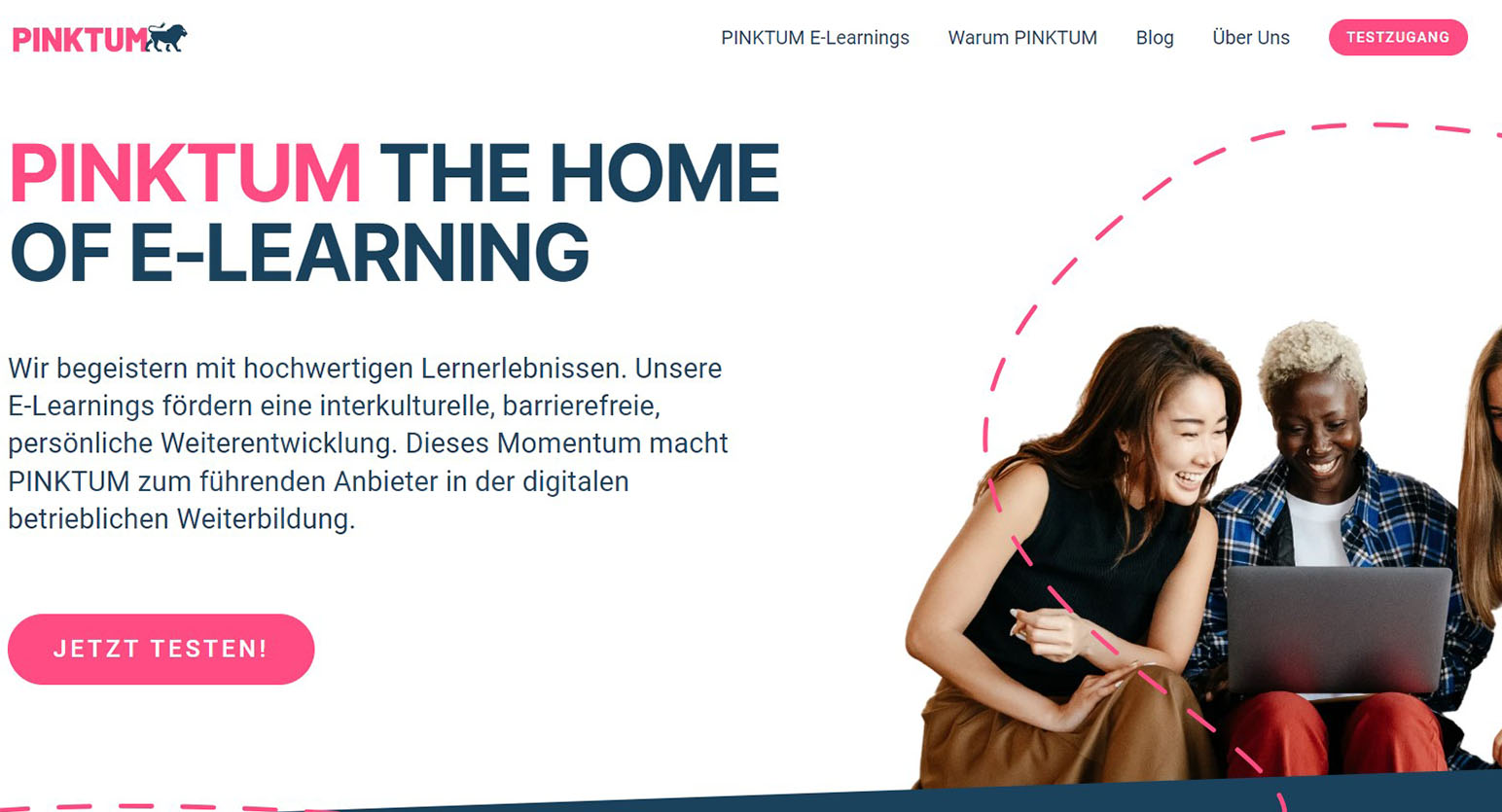 PINKTUMSoft skills, accessible |
The provider from Munich and Hamburg (formerly Pink University) now offers more than 1,300 e-trainings on leadership, communication, and collaboration. The offering is structured as a learning journey: skill check, 60-minute trainings, microlearnings, and the AI coach PINKpro.
|
on requestLicense packages per user per year; individual trainings can be added via marketplaces | View ProfileVisit Provider |
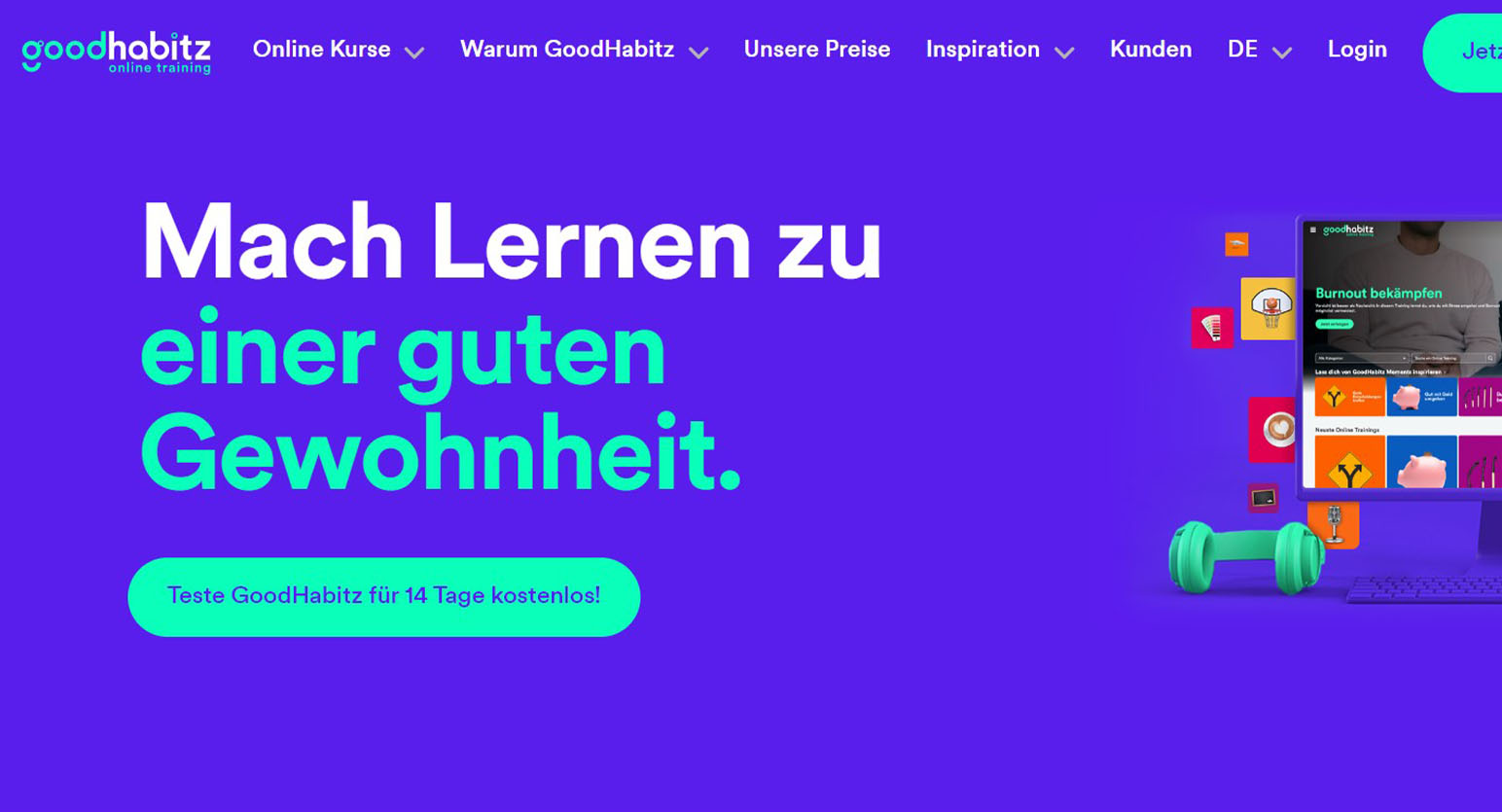 GoodHabitzFlat rate for the entire workforce |
Dutch provider with content in over 20 languages and 25 learning formats – from videos to tests to workbooks. Billed as a flat rate for the entire offering, not per course.
|
Flat rateFixed annual price based on company size, without limitation on number of courses | View profileVisit provider |
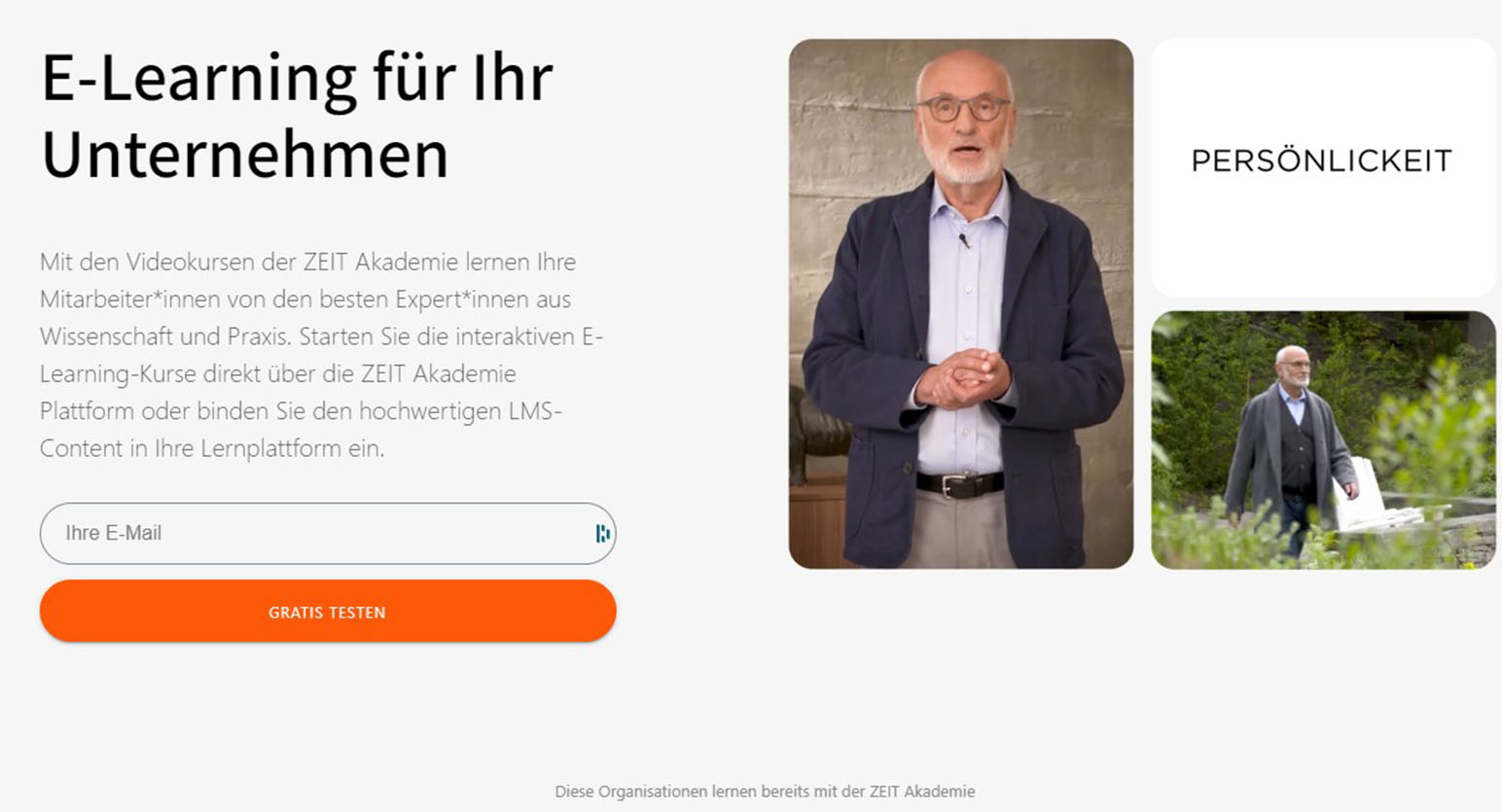 ZEIT AkademieHigh-quality production |
The continuing education offering of the ZEIT publishing group: courses with scientists, journalists, and practitioners on leadership, digitalization, communication, and personality. For companies, the editorial team produces custom formats with in-house experts upon request. | on requestCorporate licenses and individual courses; private access for comparison 19.99 €/month in annual subscription | Experience reportGo to provider |
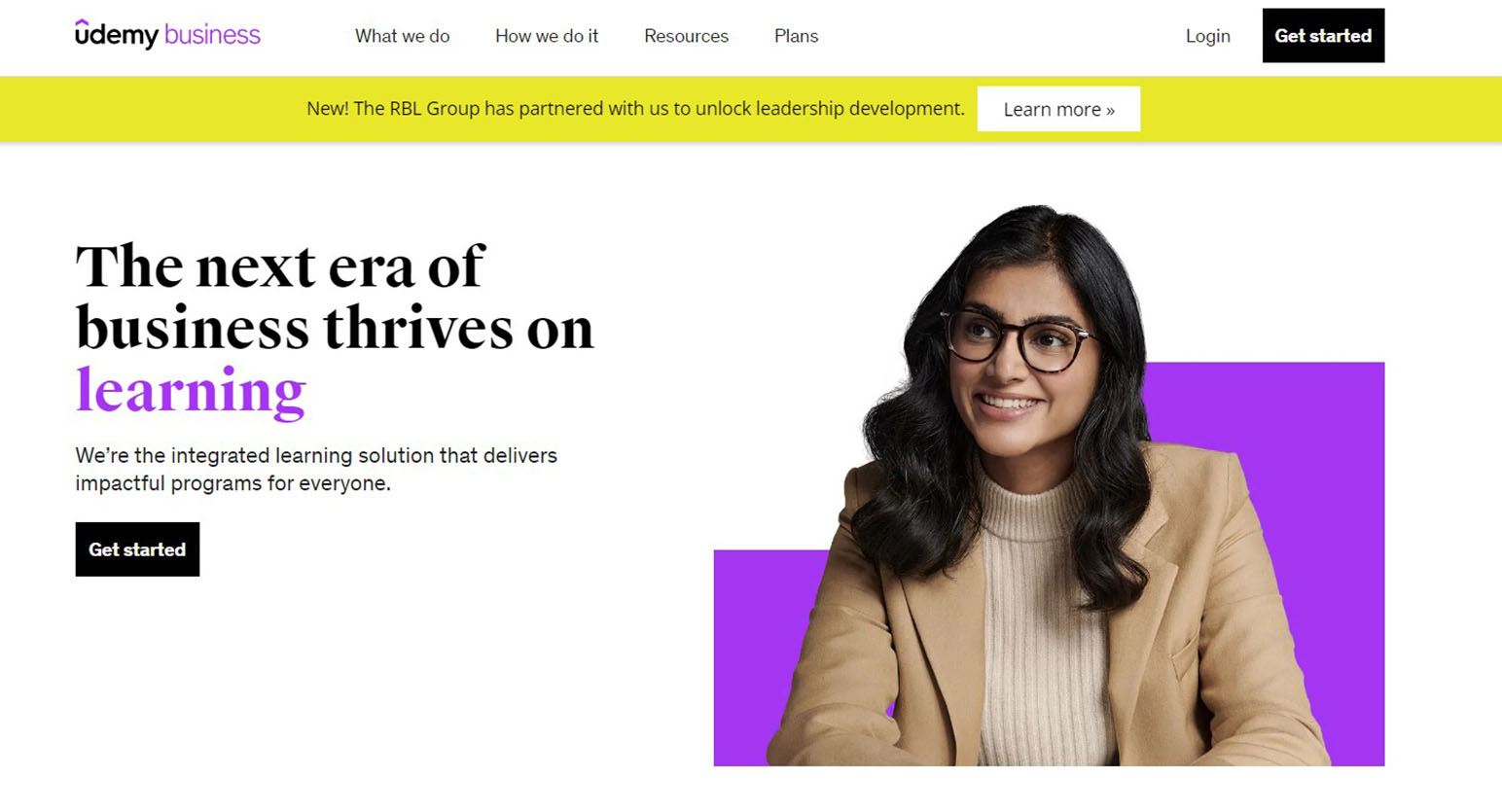 Udemy BusinessLargest catalog |
The curated corporate catalog of the world's largest course marketplace: over 30,000 courses in 16 languages, used by around 18,000 companies. Since May 11, 2026, Udemy belongs to Coursera; the platform continues with its own catalog and own login.
|
from approx. $360 / user & yearTeam plan for small groups; Enterprise from 20 users individually (market data: $240–600 per seat) | Experience reportGo to provider |
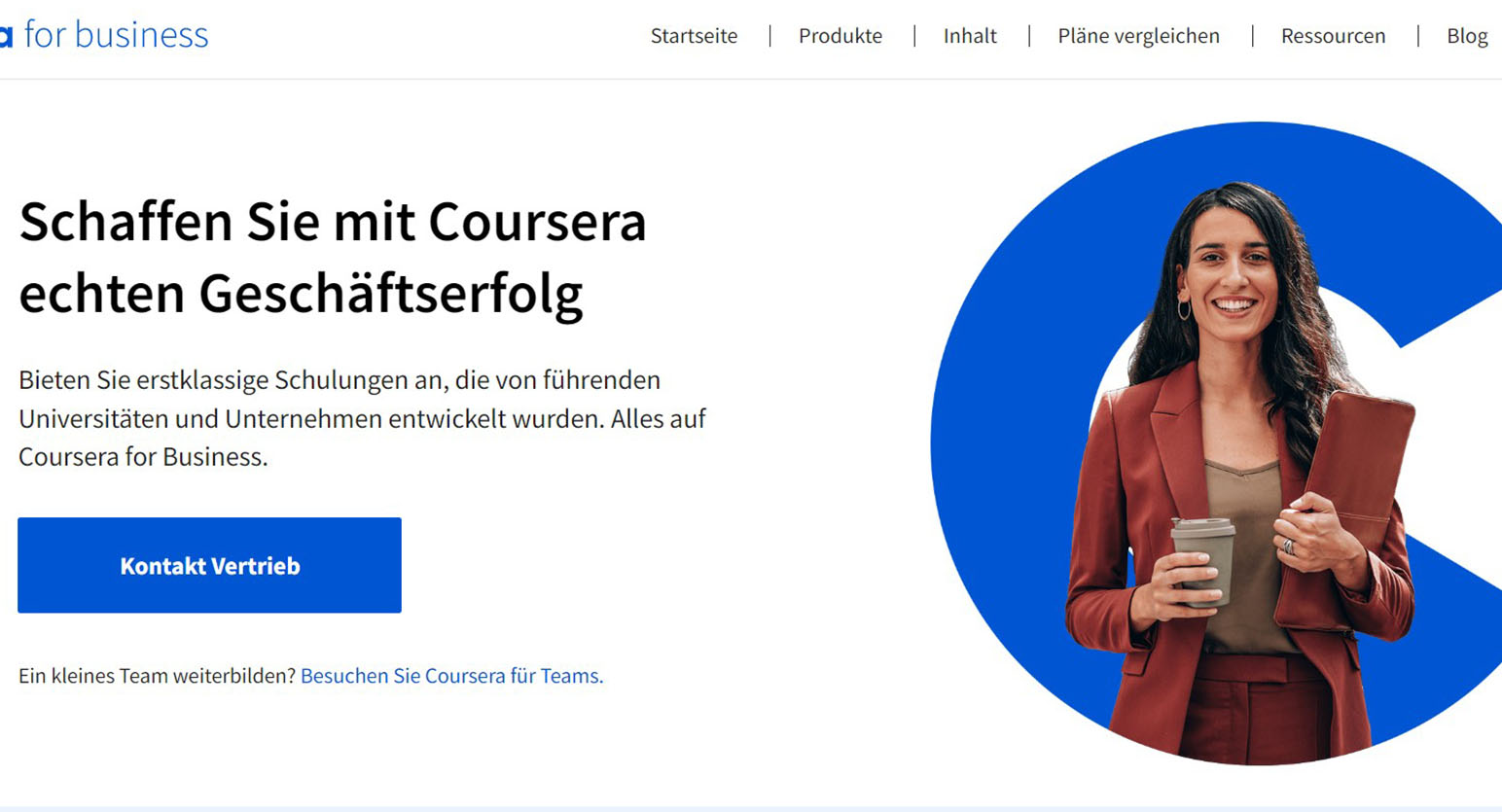 Coursera for BusinessUniversity courses & professional certificates |
Courses from universities and corporations, plus the Professional Certificates from Google, IBM, Meta, and Microsoft. After the merger with Udemy, the group counts over 290 million learners – the only provider in the field with real university degrees in its program.
|
$399 / user & yearTeam plan from 5 seats (min. $1,995/year), up to 125 users; beyond that Enterprise on request | Experience reportGo to provider |
 StackFuelData and AI, with funding |
Berlin-based specialist for data and AI skills with more than 8.500 graduates and a completion rate of 93 percent. The programs are AZAV-certified and thus eligible for funding through Bildungsgutschein (education voucher) and the Qualifizierungschancengesetz. Since January 2026, StackFuel belongs to the British provider Multiverse.
|
eligible for fundingUp to 100% via Bildungsgutschein (education voucher) or QCG; company quotas on request | View profileGo to provider |
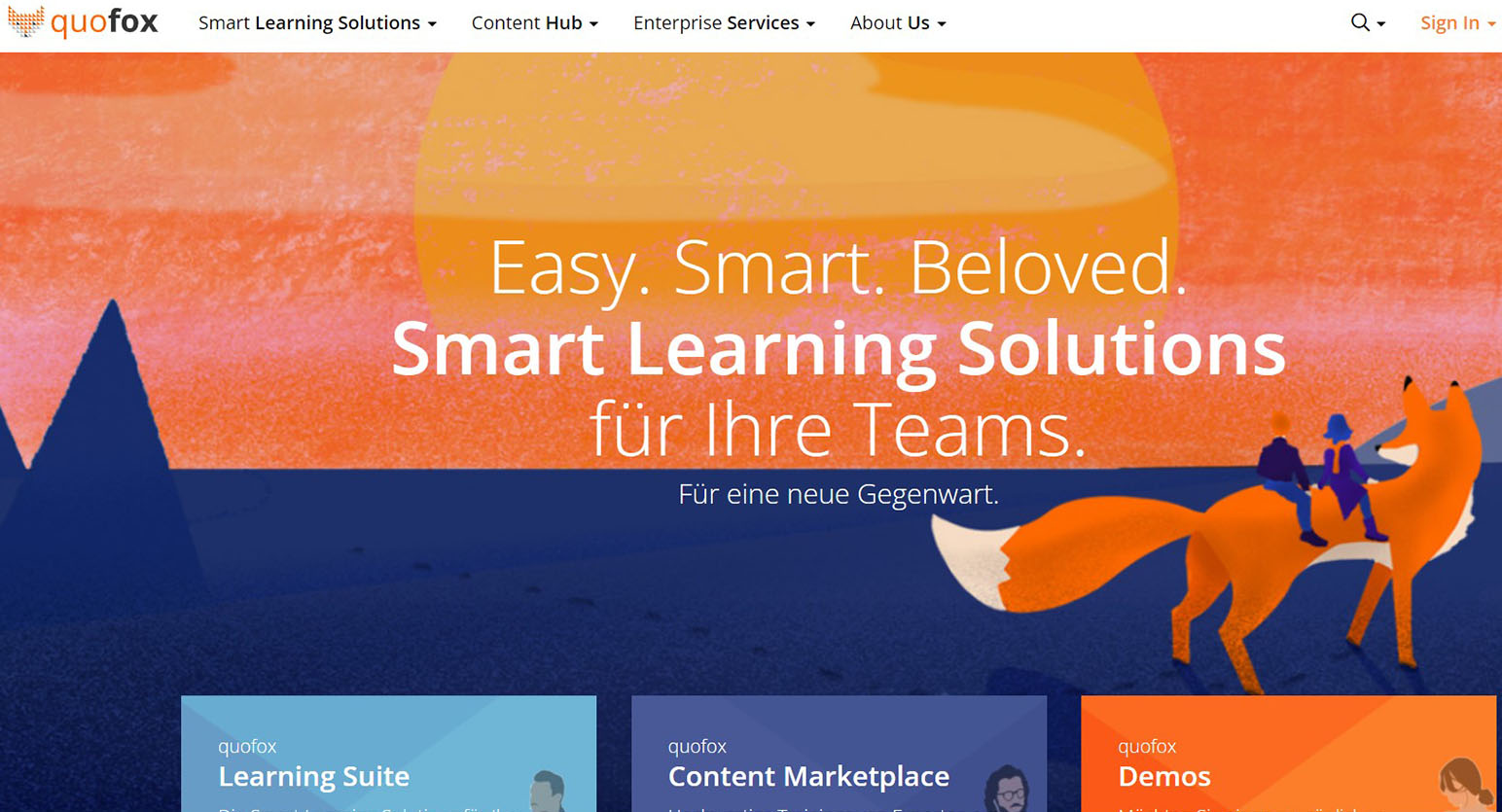 quofoxMarketplace instead of own library |
The Berlin-based quofox GmbH combines a course marketplace with offerings from third-party providers – Bitkom Akademie, Lecturio, TÜV Rheinland, ZEIT Akademie – with its own quofox Learning Suite as an LMS. Since July 2023, the company has belonged to the Dutch Archipel Academy, which continues to run the offering in the DACH region.
|
on requestCourses are billed individually, the LMS as an annual license | View profileGo to provider |
As of August 2026. I have verified all figures on the manufacturers' websites. Prices are almost always negotiable in B2B business; the information here is list prices or market data for orientation.
If you are not looking for any of the ten providers but a specific course: In the course database for online continuing education you can filter by topic, degree, and funding eligibility. If you prefer to ask rather than click, the AI search can help you.
Masterplan
German market leader
- OfferingOver 3,500 video courses in 26 languages
- FocusLeadership, change, and soft skills
- CustomersOver 300 companies, including VW, Otto Group, and DZ Bank
- TechnologyOwn content via SCORM, integration with common HR systems
- SecurityISO and TISAX certified
- PriceOn request, license per head and year
- OwnerAmadeus Fire Group, since September 24, 2025
Masterplan started in 2017 in Bochum, founded by Stefan Peukert. Today it is the best-known German provider for corporate learning. Alongside experts, well-known names are in the catalog. Simon Sinek explains "The Power of Why", lawyer Christian Solmecke explains the General Data Protection Regulation (GDPR).
What convinces me less is the prominence than the tools around it. You upload your own presentations as a SCORM package and connect the platform to your HR system. Amadeus Fire values the company at around 20 million euros at the time of purchase. For customers, nothing changes for now.
My impression: The first choice if your workforce learns in German and it's about leadership. For depth of expertise, you need a second provider.
Haufe Akademie
Content and platform from a single source
- OfferingOver 3,600 continuing education courses in 26 subject areas
- ReachApprox. 690,000 learners and over 19,000 events per year
- FormatsIn-person, live online, e-learning, and in-house
- PlatformDigital Suite with LMS, LXP, and Content Kit
- In-houseMore than 6,300 company trainings in 2026 alone
- PriceOn request, open seminars can also be booked individually
- LocationFreiburg, founded 1978, approx. 680 employees
The Haufe Akademie is the broadest provider in the field. It is also the only address where in-person seminars, live online training, e-learning, and a learning platform come from the same house. This is supported by over 2,600 trainers.
Everything digital runs through the Digital Suite. The Learning Management System covers mandatory training and certifications, the Learning Experience Platform covers voluntary learning. If you are missing a topic, the academy produces it on request.
My impression: Strong if you want everything from a single source. Honestly, you can hardly find your way around the portfolio without a consultation.
LinkedIn Learning
Broadest business library
- OfferingOver 21,000 courses in 25 languages
- In GermanMore than 2,500 courses
- PlatformLearning Hub as LXP, integrates content partners and your LMS
- ExtrasApp with offline mode, completion on request in profile
- PriceOn request, individual subscription for comparison approx. 20 euros per month
- CatchLearning data is stored with Microsoft, after contract end access is gone
LinkedIn Learning brings the largest general business library. For companies, the Learning Hub is added, a learning experience platform. It focuses on learning progress, skill profiles, and personal recommendations. In it, you also show content from content partners and from your own LMS.
The big advantage is also the biggest disadvantage. Because the platform is tied to the career network, you find courses quickly and make completions visible with one click. However, all learning data is stored with Microsoft. How the platform performs in everyday life is in the experience report on LinkedIn Learning.
My impression: Good for breadth and self-service. For mandatory training with proof, you still need your own system.
PINKTUM
Soft skills, accessible
- OfferMore than 1,300 E-Trainings
- FocusLeadership, communication, conflict, collaboration
- StructurePINKprofile check, PINKmacro with 60 minutes, PINKmicro, AI coach PINKpro
- AccessibleVideo learning partner of the initiative "BIK für Alle"
- TechnologyMultilingual, SCORM import into your own LMS
- PriceOn request, license packages per user per year
- LocationMunich with studios in Hamburg, founded 2010
PINKTUM is the brand of Pink University GmbH. The provider takes care of what is hardest to learn on the side. Namely leadership, communication, conflict, and collaboration. The catalog is structured as a learning journey, from needs assessment to AI coach.
A special feature has gained weight in 2026. PINKTUM produces accessible content and is a video learning partner of "BIK für Alle". Since the Accessibility Strengthening Act came into effect, this is no longer a nice-to-have for many companies.
My impression: The cleanest production in the field. You have to buy specialist and IT topics elsewhere.
GoodHabitz
Flat rate for the entire workforce
- OfferManageable library in more than 20 languages
- FormatsUp to 25 per topic, from video to test to workbook
- PriceFlat rate, fixed annual price based on company size
- SecurityISO 27001 and ISO 27701
- TechnologyConnection to your own LMS via LTI or SCORM
- StrengthInternational workforces
- LocationNetherlands
GoodHabitz takes a different approach than most. Instead of stacking the largest possible catalog, there is a manageable library. In return, you get each topic in up to 25 learning formats. I like the idea behind it: Those who can choose the format are more likely to stick with it.
Billing is a flat rate, i.e., a fixed annual price based on company size. This makes calculation easy. It takes the discussion away from your HR department about who gets which course.
My impression: Ideal when everyone should get access and no one knows in advance who needs what.
ZEIT Akademie
High-quality production
- PublisherZEIT publishing group
- TopicsLeadership, digitalization, communication, methods, personality
- StructureShort lessons with quiz questions and graphics
- TechnologyCourses via SCORM or MP4 into your own LMS
- ExtraCustom formats on request, e.g., interviews with management
- PriceOn request, private access for comparison 19.99 euros per month
- CatchSmall library, no offer for mandatory training
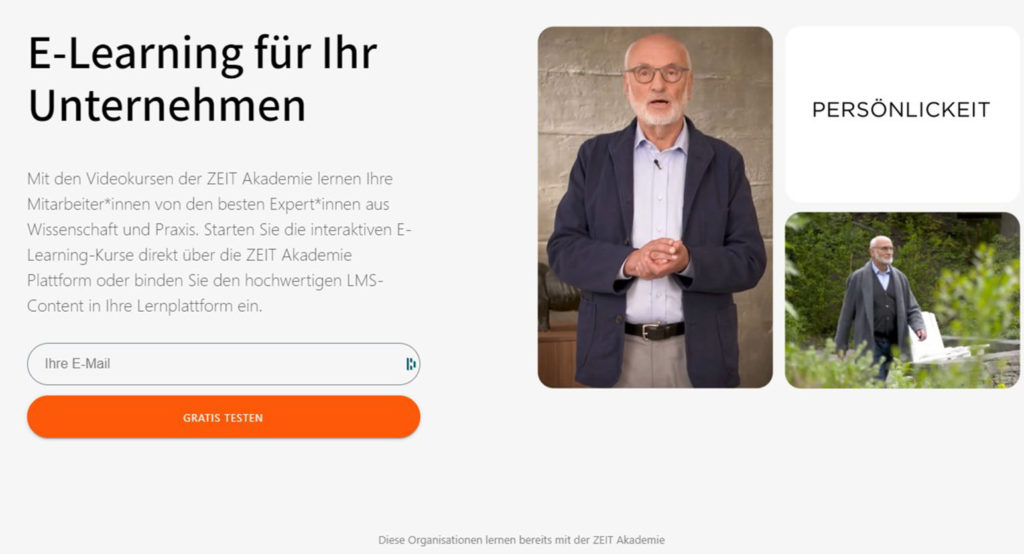
The ZEIT Akademie is the continuing education offering of the ZEIT publishing group. It relies on what a publisher does best: carefully produced content with recognized experts from academia and practice.
For companies, there are two ways. You use the ZEIT Akademie's learning platform or import the courses into your own system via SCORM. In addition, you can have custom formats produced. What the courses look like in terms of content is shown in the experience report on the ZEIT Akademie.
My impression: A good choice for leadership programs. As basic coverage for the entire workforce, the library is too small.
Udemy Business
Largest catalog
- OfferOver 30,000 curated courses in 16 languages
- SelectionFrom approx. 290,000 courses on the open marketplace
- CustomersApprox. 18,000 companies
- ExtrasLearning paths, user management, and analytics
- PriceFrom approx. 360 Dollar per user per year
- OwnerCoursera, since May 11, 2026
- CatchQuality varies, certificates only prove participation
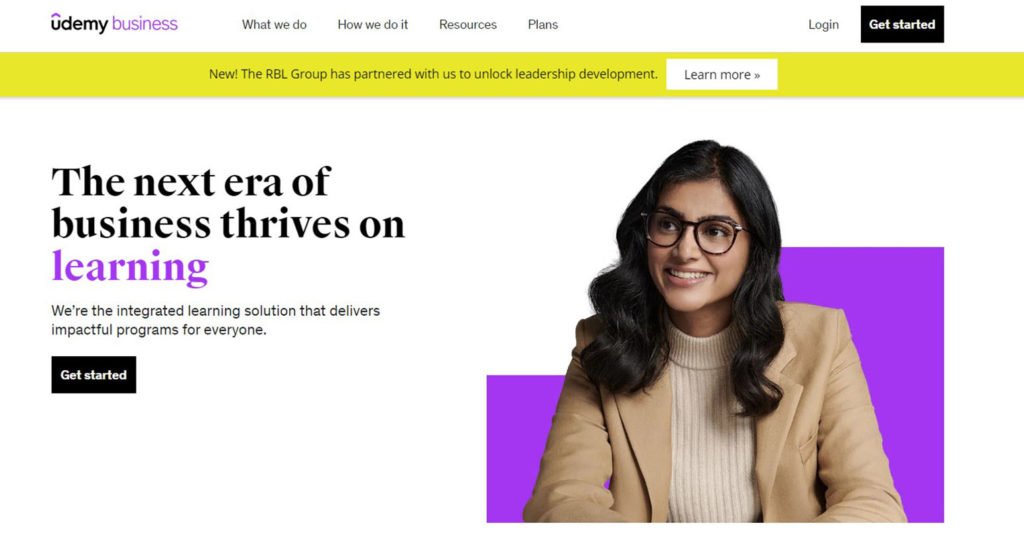
Udemy Business is the curated selection of the large Udemy marketplace. From approx. 290,000 publicly sold courses, the provider selects those that meet its quality and relevance criteria.
The strength lies in speed. New tools, frameworks, and AI models are often available as a course just a few weeks after their release. Publishers are still producing then. The price for this is the fluctuating quality. Experiences with the platform can be found in the Udemy review.
My impression: Unbeatable for IT and software. How the catalog will develop after the Coursera merger remains open.
Coursera for Business
University courses and professional certificates
- OfferCourses from universities and corporations, plus full online degree programs
- CertificatesProfessional Certificates from Google, IBM, Meta, and Microsoft
- StrengthData, AI, and IT fundamentals
- Price399 Dollar per user per year, from five seats
- LanguagePredominantly English, German mostly only as subtitles
- GroupSince May 11, 2026, Udemy is also part of it
- CatchTeam plan ends at 125 users, above that Enterprise upon request
Coursera is the only provider in this list whose certificates carry weight outside your company. The Professional Certificates from Google, IBM, Meta, and Microsoft are a selling point in job applications. For small teams, there is a real list price instead of a quote.
The catch for German workforces is the same as for private individuals. The catalog is predominantly English, German is mostly only available as subtitles. Those who need courses in the local language often combine Coursera with a German provider. Details are in the Coursera review.
My impression: The best choice if you want a certificate that carries weight externally.
StackFuel
Data and AI, with funding
- ProgramsData Analyst, Data Scientist, Data Engineer, KI-Fachkraft, Python
- Practice80 percent exercises in a cloud-based programming environment
- SupportPersonal mentoring in feedback sessions
- ResultsOver 8,500 graduates, 93 percent completion rate
- FundingAZAV-certified, in individual cases up to 100 percent
- ReferencesBASF, BMW, Deutsche Bahn, Telefónica
- OwnerMultiverse, since January 2026
StackFuel from Berlin is not a library provider. Here you get a continuing education program with a start and end. The courses consist of 80 percent practical tasks with real industry datasets. A completion rate of 93 percent is unusually high for online continuing education courses.
Important for funding: The programs are AZAV-certified. This means they are eligible for funding via Bildungsgutschein (education voucher) and the Qualifizierungschancengesetz, in individual cases up to 100 percent. Since January 2026, StackFuel is part of Multiverse. The British provider aims to qualify 100,000 employees in Germany for AI topics.
My impression: The only provider here where funding is realistic. However, it only covers one topic area.
quofox
Marketplace instead of own library
- PrincipleCourse marketplace with third-party providers instead of its own library
- PartnersBitkom Akademie, Lecturio, TÜV Rheinland, ZEIT Akademie
- Platformquofox Learning Suite, modular LMS in your own corporate design
- FormatsIn-person courses alongside self-paced modules
- PriceCourses billed individually, the LMS as an annual license
- OwnerArchipel Academy, since July 2023
- CatchSome of the offerings are priced only upon request
quofox solves a problem that many HR departments know. For each course a separate contract, a separate invoice, a separate login. The Berlin-based provider instead bundles a course marketplace with its own Learning Suite.
Since July 2023, quofox belongs to the Dutch Archipel Academy. The team in Berlin has become small since then. If you go with quofox, you should address the brand's future in contract discussions.
My impression: Practical if you want to book many providers through one contract. The quality depends on the respective course provider.
Learning Management Systems (LMS) in Comparison
As soon as training sessions need to be documented – occupational safety, data protection, compliance, and from 2025 also AI skills – a course library is no longer enough. What you need is a system that assigns training, reminds you of deadlines, and records participation in an audit-proof manner. That is exactly the job of a Learning Management System.
The following selection covers the range actually used in German-speaking countries – from open source to enterprise. It is not a ranking: which system fits depends on company size, existing IT resources, and whether content is produced in-house or purchased.
| System | Short Profile | Operation & Costs | To Provider |
|---|---|---|---|
MoodleOpen source, globally widespread |
By far the most widespread LMS, originally from the education sector. Moodle Workplace is the version tailored to companies with org charts, certifications, and automated learning programs.
|
self-hostedSoftware free; costs arise for hosting, setup, and maintenance – usually via a certified partner | To Provider |
ILIASOpen source from Germany |
An open-source LMS originating in Cologne, mainly used in universities, public authorities, and the German armed forces. Strong in exams, competency management, and formal certifications.
|
self-hostedLicense-free; support via partners or your own IT | To Provider |
imc Learning SuiteEnterprise from the DACH region |
One of the best-known corporate LMS from German-speaking countries, based in Saarbrücken. Designed for large organizations with complex role, certification, and compliance requirements.
|
on requestCloud or on-premises; price based on number of users and modules | To Provider |
reteachFor small and medium-sized businesses |
Berlin-based SaaS learning platform from 2020, reportedly used by over 1,500 companies. Target group is SMEs and mid-sized companies that want to set up onboarding and mandatory training without an IT project.
|
SaaS subscriptionMonthly or annual license based on number of users, hosting in Germany included | To Provider |
edyoucatedLXP with skill analysis |
Learning Experience Platform from Münster that focuses on competency-based learning: the system surveys existing skills and suggests personal learning paths from them – using both own and purchased content.
|
on requestSaaS, price based on number of users | To Provider |
360LearningCourses from the specialist department |
French platform with a collaborative learning approach: not HR produces the courses, but the experts themselves – with an authoring tool, comment function, and approval process.
|
on requestSaaS, billed by active users | To Provider |
DoceboInternational, AI-powered |
One of the most established international enterprise LMS, founded in 2005. The focus is on AI features: natural language search, automatically generated course components, tests, and video presentations.
|
on requestSaaS, price based on number of users and modules | To Provider |
Not in the table, but often part of the selection process: the Digital Suite der Haufe Akademie and the quofox Learning Suite – both interesting if you want platform and content from a single source. If you already use SAP SuccessFactors, Personio or another HR system, first check the learning module included there: The worst solution is rarely the second-best system, but two systems without shared personnel data.
What does e-learning cost in a company?
In B2B business, there are hardly any price tags – billing is per head, per year, and with a discount from a certain quantity. Four models are common:
| Model | How it is billed | Fits if … |
|---|---|---|
| License per head | Fixed amount per employee per year, usually with minimum purchase and tiered pricing. | … all employees should get access and the number is stable. |
| Flat rate | An annual price for the entire offering, regardless of the number of courses (e.g., at GoodHabitz). | … nobody can know in advance who needs which course. |
| Individual booking | Per course and person, like on a marketplace (quofox, Haufe-Seminare). | … only individual people need very specific topics. |
| Platform + content separate | LMS license based on user count, content licensed separately or self-created. | … a lot of in-house knowledge exists and needs to be documented. |
What is often overlooked in offers: Setup and data import, connection to the HR system, training of administrators, translations, and – the most expensive item of all – the working time spent learning. One hour of learning time per month per head costs a company with 200 employees more than any license. And another point for contract negotiation: With subscription models, nothing remains after the contract ends – anyone who needs to keep records of completed mandatory training should clarify the export of learning history beforehand, not at the time of cancellation.
Funding: Who pays for the continuing education?
Company-sponsored continuing education is eligible for funding in Germany – but only with AZAV-accredited providers. Classic subscription platforms like LinkedIn Learning or Udemy Business are therefore excluded; accredited courses from e.g. StackFuel or the large continuing education providers are not.
- Qualifizierungschancengesetz (§ 82 SGB III). Subsidies for course costs and wages for employees whose jobs are changing due to technology. The amount depends on the size of the company – in micro-enterprises, up to 100 percent of the course costs are possible.
- Qualifizierungsgeld (since April 1, 2024). For companies with training needs due to structural change: The Federal Employment Agency pays employees during the continuing education 60 percent of their last net salary (67 percent with children), similar to short-time work benefits. The employer bears the course costs.
Requirements for Qualifizierungsgeld: more than 120 hours of continuing education (not consecutively), an AZAV-accredited provider, and a works agreement or collective bargaining agreement that records the need – at least 20 percent of the workforce (for companies with 250+ employees) or 10 percent in smaller companies must be affected. For fewer than ten employees, a written declaration is sufficient.
Both are applied for before the start of the measure – anyone who books first and asks later comes away empty-handed. The first point of contact is the Employer Service of the Federal Employment Agency. Funded courses can be found in the course database, an overview of providers at the continuing education providers.
AI in company-sponsored continuing education 2026
The biggest change in the last two years is not in the catalog, but in the way learning happens. In the trend study mmb Learning Delphi 2025/2026, for which 77 experts from the education industry were surveyed between December 2025 and February 2026, chatbots and AI learning assistants took first place at 95 percent among the learning formats that will become important in the next three years. The experts also expect that large AI providers will take over tasks that traditional e-learning providers have done so far.
In practice, this means: Almost every company platform now has an assistant that answers questions about the course material, quizzes, or generates exercises – at PINKTUM as a conversation coach, at Coursera as a learning companion, at Docebo as a search assistant. For HR development, this changes the task: No longer buying courses, but building AI competence and ensuring that the assistants are used for asking questions and not for cutting corners.
The second driver is legal. According to Article 4 of the EU AI Act, companies that use AI systems have, since February 2, 2025, been required to ensure that their employees have sufficient AI competence; national market surveillance for this has been running since August 2, 2026. No specific curriculum is prescribed, but the result – and the proof – is. That is exactly why basic AI training courses are currently appearing in every mandatory training catalog.
Obligations 2026: Accessibility, Data Protection, AI Competence
Three topics appear in 2026 in practically every provider selection – and can only be repaired expensively afterwards:
- Accessibility. The Barrierefreiheitsstärkungsgesetz (BFSG) has been in effect since June 28, 2025. It targets products and services for consumers, not the internal learning platform – but if you also deliver courses to customers, partners, or the public, you are within its scope. For existing services, there is a transition period until June 28, 2028, and fines range up to 100,000 euros. Regardless of the legal situation: subtitles, transcripts, and keyboard operability benefit everyone – and are difficult to retrofit later.
- Data protection. An LMS processes performance data of employees. Required are a data processing agreement, a clarified server location, and – in companies with a works council – a works agreement that defines which evaluations are allowed. Evaluations at the individual level are the most common point of contention during implementation.
- AI competence. See above: Article 4 of the AI Act requires trained employees, not just a policy. If you already document training, you should include AI basics in the catalog of mandatory evidence.
In seven steps to the right provider
- 1. Clarify the reason. Mandatory training with certification, voluntary continuing education, or retraining? Everything else depends on this – only in the first case does the path necessarily lead through an LMS.
- 2. Count the target group. Entire workforce or 30 managers? Flat-rate models only pay off at scale.
- 3. Define languages. Production and administration often need different languages – subtitles are not a substitute for a German-language version.
- 4. Check technology. SCORM, xAPI, or LTI? And does the integration with the HR system from which the personnel data comes work?
- 5. Define certifications. Who must be able to prove what and when – and how long are the data available after the contract ends?
- 6. Check funding beforehand. AZAV accreditation of the provider and application before the start, otherwise the subsidy is forfeited.
- 7. Test phase with real people. Not the sales department's demo, but ten employees, four weeks, then honest feedback. The dropout rate in the test says more than any course description.
Frequently asked questions about e-learning for companies
Further reading
For personal continuing education instead of for the team: the big comparison of e-learning platforms. What the term actually covers is explained in What is E-Learning?, and the abbreviations from this article – SCORM, xAPI, LXP, Blended Learning – are in the E-Learning Lexicon.
Individual tests of the platforms that are also interesting for private use: LinkedIn Learning, Coursera, Udemy, and the ZEIT Akademie. Specific courses with a certificate are in the course database. For training of the entire team, you'd best ask the provider directly.
I hope this overview helps with the selection. If a provider is missing or a detail has changed: Feel free to write to me – the page is regularly updated.
 Article written by Tim Geier - about the author.