Which language learning app suits which learning type
I sort the eight apps into four groups. The first group teaches you properly. Babbel and Busuu build their lessons by level. Both start with a placement test and work their way cleanly through the grammar.
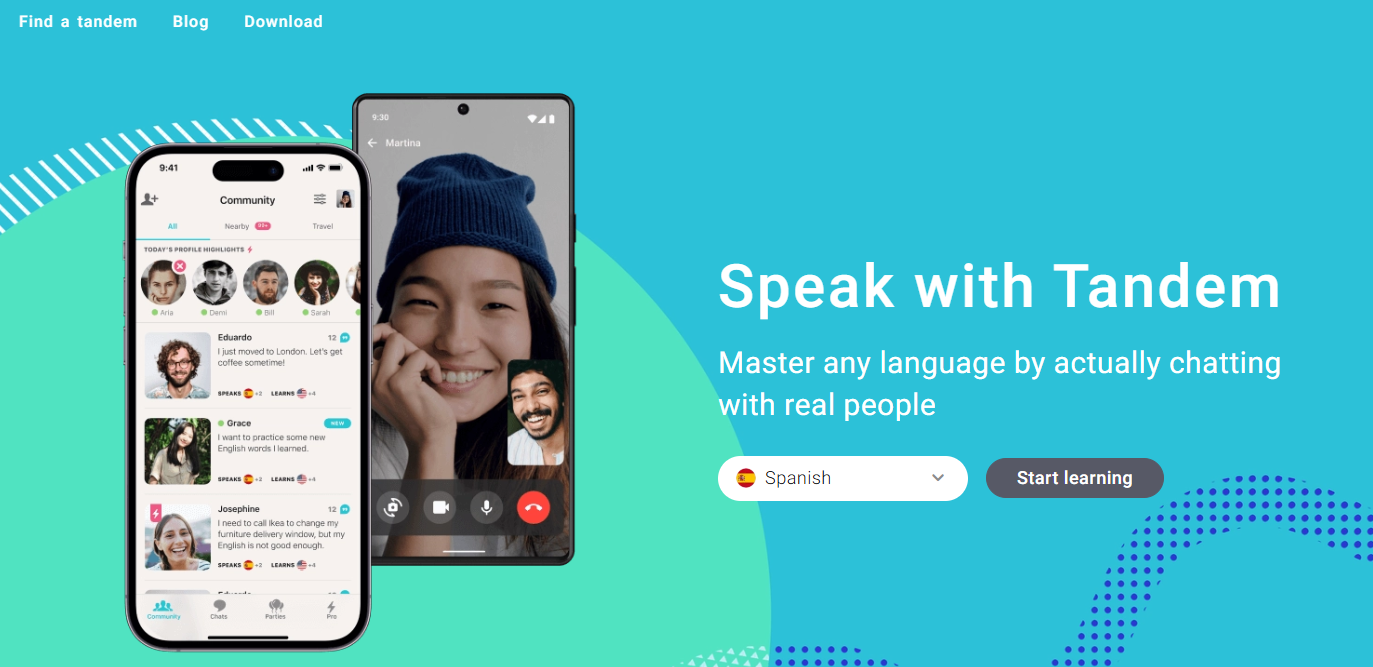
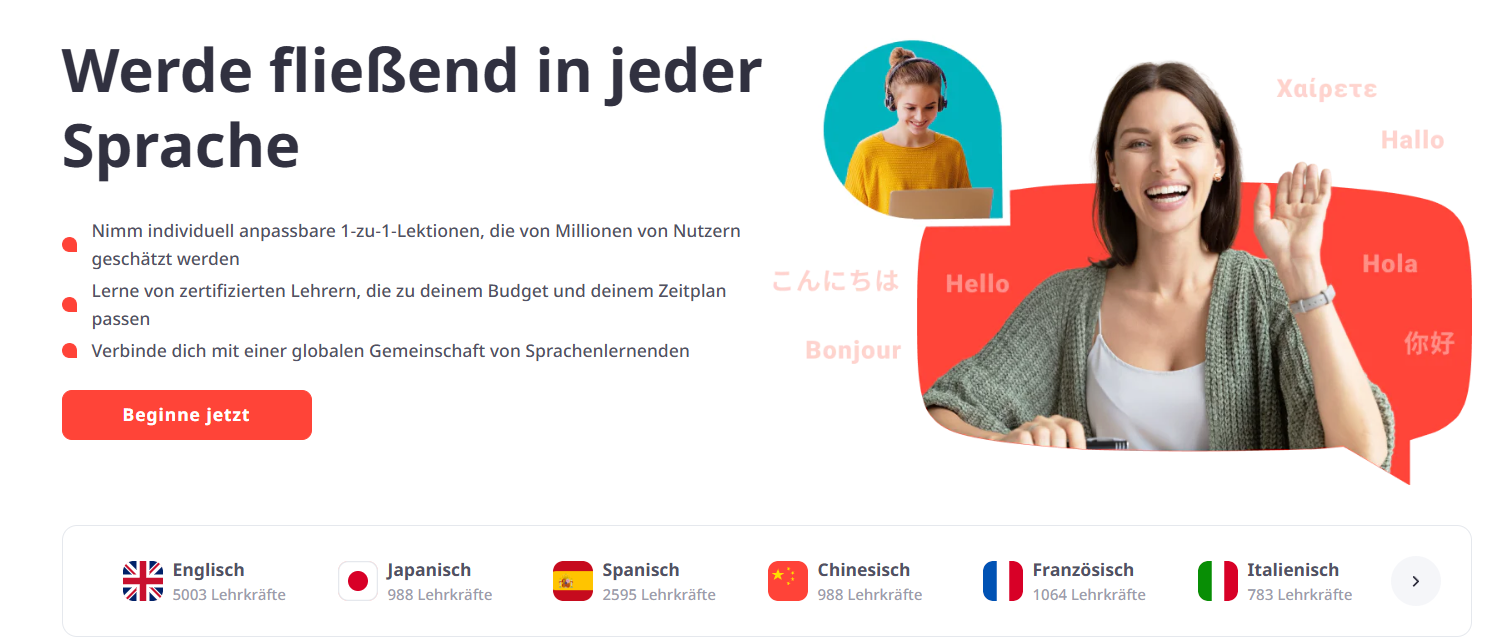
The second group drills your vocabulary. Duolingo, Memrise and MosaLingua rely on short units and constant repetition. The third group connects you with people. With Tandem you find a learning partner for free. With italki you book paid hours with real teachers. The fourth group doesn't teach at all: Anki only gives you an empty flashcard system; you bring your own content or download a ready-made community deck.
This classification helps you with the initial decision. If you are a complete beginner, start in group one or two. If you already know a few sentences, jump straight to group three. The most common mistake is the wrong order. If you go into a language exchange without basic vocabulary, you’ll stand there awkwardly silent.
Why spaced repetition works for vocabulary learning
Almost all of these apps use distributed repetition, mostly called spaced repetition. The principle is old and quite simple. You see a word again exactly when you are about to forget it. MosaLingua has built its entire concept on this, Anki even its whole program without a fixed course around it.
Research confirms this method. A meta-analysis from medical education evaluated fourteen studies with 21,415 participants in 2026. The pooled effect size was 0.78, a very good value for a learning method. In 13 of the 14 studies, learners with distributed repetition performed better. Even follow-up tests after 6 to 20 months showed no reduced benefit.
One catch remains though. Vocabulary in your head is far from a conversation. It is exactly at this point that the seven apps diverge.
Practice speaking with AI or with real people
In 2026, almost every language learning app has an AI conversation partner on board. Babbel launched its speech trainer Babbel Speak in September 2025 as an open beta. Duolingo sells AI role-playing games in its Max subscription, Memrise advertises its AI buddies. Busuu and MosaLingua have their own AI conversation exercises. Only Tandem and Anki do without it completely. On Tandem, real people write; on Anki, only you yourself.
From my experience, the AI partner is better than its reputation. It has infinite patience and you won't embarrass yourself in front of anyone. But it doesn't notice when you fob it off with three standard sentences. A real person notices that immediately. That's why I find the combination strongest: AI against fear, human for progress.
Prices of the eight apps at a glance
I checked all prices in August 2026, Anki was added in September 2026. The annual subscriptions are surprisingly close to each other, the monthly subscriptions are not at all. If you pay monthly, you pay significantly more almost everywhere.
| App | Price (as of August 2026) | Free version |
|---|
| Duolingo | Super €14.99/month, Max €29.99/month | all content, with ads and hearts |
| Babbel | €108 for 12 months | only the first lesson per language |
| Busuu | €6.99/month with annual subscription | limited lessons, with ads |
| MosaLingua | €71.90/year | no permanent free version |
| Memrise | €67.99/year | basic version with ads |
| Tandem | €59.90/year | language exchange completely free |
| italki | Plus subscription €69.99/year | lessons are paid per hour |
| Anki | Windows/Mac/Android €0, iOS €29.99 one-time | Yes, except on iPhone |
With italki you have to be careful. The subscription only includes additional features; the lessons cost extra. Tandem, on the other hand, is the only app that remains usable permanently without payment.
Memrise and MosaLingua also sell a lifetime access. At Memrise it was recently €92, at MosaLingua around €100. Both offers usually appear on Black Friday. From the second year of learning, it clearly pays off.
What certificates from language learning apps are worth
Busuu is the only one of these apps that issues a certificate, together with McGraw Hill Education. It certifies you levels A1 to B2 according to the European Framework of Reference. That sounds impressive, but it has clear limits.
Such a certificate is not a TOEFL or a Goethe certificate. Universities and authorities do not accept it as proof of language proficiency. Still, it is not worthless. It shows on your resume that you stick with it, and it motivates you yourself. If you really need the proof, book an official exam.
I find the placement tests more useful. Babbel and Busuu put you on the right level with them. That saves you weeks of lessons you already master.
How far an app really gets you
Now the number nobody wants to hear. LanguageCert estimates about 95 lesson hours for level A2. For B1 it's around 180 hours, for B2 another 180. These values apply per level and are not cumulative.
Apply that to your app. Ten minutes daily is about 60 hours per year. For a solid A2 you therefore need roughly one and a half years. Duolingo itself reports that learners after five course stages got as far as students after five semesters. That is a study by the provider, so take it with caution.
My recommendation for getting started
Start with one app, not three. If you want to learn in a structured way, take Babbel or Busuu. If you just want to have fun for now, take Duolingo. Both cost you almost nothing in the first few weeks.
After about eight weeks comes the more important step. Find a person to talk to, free via Tandem or paid via italki. In my opinion, this step decides everything. It turns your nice learning series into a language you really speak.